The Pursuit of Happiness
The Pursuit of Happiness is one of our unalienable rights but what does that actually mean? We’ll look at the original meaning of this phrase and the wisdom it offers for our current political malaise.
Since its inception, the Constitution has been criticized for not doing enough to protect basic freedoms. Even with the addition of the Bill of Rights, slavery persisted. Abolitionists were divided on whether the highest law in the land could ever be redeemed. Neither a divine document nor a tool of elites, the Constitution might also be seen as an invitation to develop the habits of civic friendship.
In 1969, the Supreme Court prohibited school bans on black arm bands. In the 21st century, language that is deemed offensive may be grounds for dismissal. What rights do students have? This presentation considers the challenges of free speech and dress codes. Is there a way out of this conundrum?
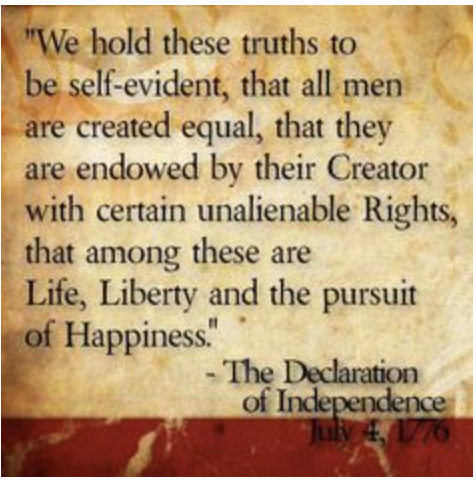
When the Declaration of Independence was penned, the Pursuit of Happiness meant something very different than it does today. The nation’s Founders understood that freedom depended on civic virtues, not material possessions. We’ll look at ways to reawaken a pursuit of happiness in our current civics programs.
The Declaration of Independence acknowledges a most volatile right: the people's right to rebel. But must that right always be so violent? We'll consider how the language of the Declaration guides social movements, across the political spectrum, to institute a government that seems most likely to protect each other's unalienable rights.
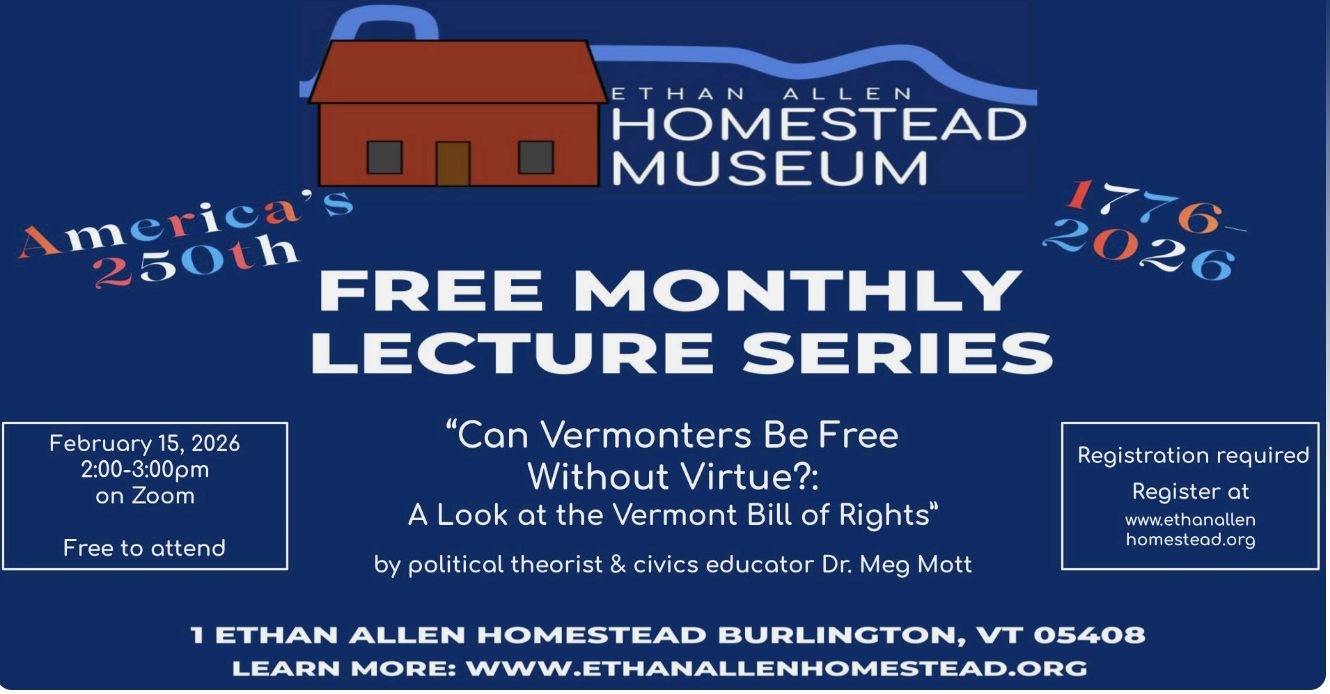
We often think of rights as something the government can’t do. But what responsibility do these rights entail? We’ll look at the civic virtues listed in the Vermont Bill of Rights and consider ways to revive them in our common life.
In 1969, the Supreme Court made it harder to put extremists in jail. This presentation weighs and considers the arguments in the Brandenberg decision. On the anniversary of the attack on the Capitol, it’s worth asking ourselves how do we benefit when we tolerate extremist speech?
The Declaration of Independence acknowledges a most volatile right: the people's right to rebel. But must that right always be so violent? We'll consider how the language of the Declaration guides social movements, across the political spectrum, to institute a government that seems most likely to protect each other's unalienable rights.
An exhibition hosted by Brattleboro Indivisible, featuring a panel, moderated by Meg Mott with Gemma Seymour, Tristan Roberts, and Susie Webster-Toleno. A lively discussion that builds bridges on a contentious issue by thinking more sharply and listening more kindly.
The Preamble to the Constitution describes the fruits of a democratic republic: justice, tranquility, welfare, defense and liberty. But how do we get human beings to opt for these public goods and not succumb to partisan fears and grievances? This presentation considers how the design of the Constitution nudges us towards better outcomes even as we are losing faith in ourselves.
The United States Constitution reduces the power of government through a system of checks and balances. But what does it have to say about civil society? This presentation considers how the Constitution can help us develop the habits of friendship with our political opponents through never-ending contestation.
The United States Constitution reduces the power of government through a system of checks and balances. But what does it have to say about civil society? This presentation considers how the Constitution can help us develop the habits of friendship with our political opponents through the key principles of free speech and due process.
The United States Constitution reduces the power of government through a system of checks and balances. But what does it have to say about civil society? This presentation considers how the Constitution can help us develop our capacities to understand, to act, and to judge.
The Declaration recognizes the right of the People to alter or abolish their government. In 1776, that meant taking up arms against the King. In the 1960’s that work looked like non-violent direct action. We’ll consider the virtues needed in both approaches.
The Declaration of Independence acknowledges a most volatile right: the people's right to rebel. But must that right always be so violent? We'll consider how the language of the Declaration guides social movements, across the political spectrum, to institute a government that seems most likely to protect each other's unalienable rights.
The United States Constitution reduces the power of government through a system of checks and balances. But what does it have to say about civil society? This presentation considers how the Constitution can help us develop the habits of friendship with our political opponents through the key principles of free speech and due process.
After Irene, Vermonters proved themselves strong. But what should towns do when the floods keep coming? This presentation considers how disagreement can strengthen a town’s ability to handle the rising waters.
Since its inception, the Constitution has been criticized for not doing enough to protect basic freedoms. Even with the addition of the Bill of Rights, slavery persisted. Abolitionists were divided on whether the highest law in the land could ever be redeemed. Neither a divine document nor a tool of elites, the Constitution might also be seen as an invitation to develop the habits of civic friendship.
The right to protest is one of our fundamental freedoms, but what about speech that leads to violence and social disorder? This Town Hall considers the expansions of rights under the First Amendment over the course of the 20th century. The question is, with greater protections for vociferous dissent, what do we need to still feel safe?
Since its inception, the Constitution has been criticized for not doing enough to protect basic freedoms. Even with the addition of the Bill of Rights, slavery persisted. Abolitionists were divided on whether the highest law in the land could ever be redeemed. Neither a divine document nor a tool of elites, the Constitution might also be seen as an invitation to develop the habits of good clash.
This term the Supreme Court will decide whether bans on homeless encampments are a violation of the 8th Amendment. This presentation considers the arguments on both sides of the debate.
Deliberation is the practice that holds our democracy together, but does it always lead to better decisions? We’ll consider how we can reduce polarization by generating new pathways in the brain.
The First Amendment prohibits Congress from abridging the freedom of speech. But what does that actually mean. This presentation considers the intellectual and spiritual energy required to grasp the need for freedom and social cohesion.
In June of 2022, the Supreme Court handed the abortion controversy back to the states. Are we ready? What do we need to do to live in a pluralist society?
Deliberation is the practice that holds our democracy together, but does it always lead to better decisions? We’ll consider how we can reduce polarization by generating new pathways in the brain.
The First Amendment prevents Congress from passing any laws that abridge the freedom of speech. But what does that actually mean? While some claim that limits on speech are necessary for marginalized persons to feel included, others argue that the criminalization of speech gives too much power to the government. We’ll consider the history of speech laws in the United States and how the Supreme Court has ruled on those efforts. If free speech must endure hate speech, how might this fundamental freedom help us build more vibrant communities?
All arguments are welcome as we make full use of our reasoning powers to bring the First Amendment to life!
This presentation is supported by the Vermont Humanities Council.
Source:: Source:: https://www.oyez.org/cases/1991/90-7675
Earlier Event: September 20
Can We Protect Religious Liberties and Sexual Minorities?
Later Event: October 10
The Supreme Court prohibits governments from prohibiting speech based on content. How might we use this fundamental freedom to enhance our political communities?
The Supreme Court determined that governments may not prohibit speech or expressive actions because it disagrees with the content of the speech. If hate speech cannot be prohibited, what other options do we have?
In this final session we’ll consider the pleasures of persuasion and the self-destructive habit of polarization.
Activists love zero-sum arguments, but is that all one can say? We’ll consider more nuanced arguments from across the political spectrum.
The Supreme Court ruled that states with school voucher programs must extend those benefits to religious institutions. What should Vermont do?
The Supreme Court determined that governments may not prohibit speech or expressive actions because it disagrees with the content of the speech. If hate speech cannot be prohibited, what other options do we have?
The First Amendment prohibits Congress from abridging the freedom of speech. But what does that actually mean. This presentation considers the intellectual and spiritual energy required to grasp the need for freedom and social cohesion.